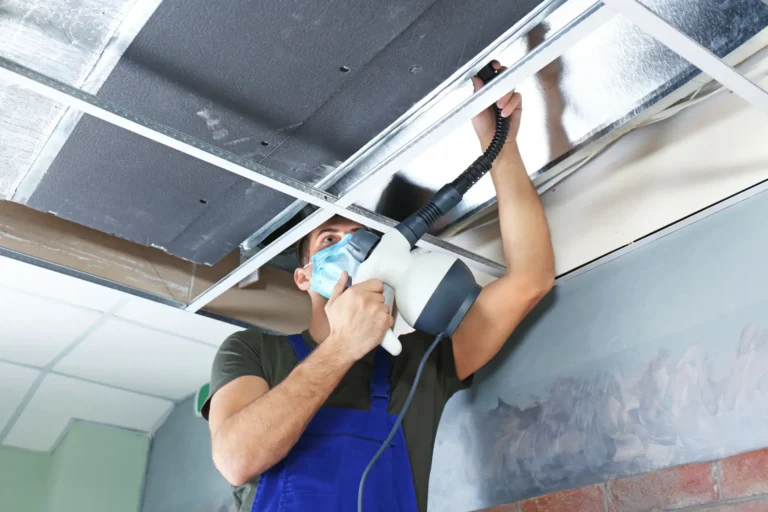

You notice it when the system cycles on after a long summer away, or the first time the furnace runs in autumn: a faint, musty odor that drifts from the registers, a layer of dust that settles on shelves faster than it used to, or a family member who starts sneezing the moment the blower kicks in. These are the quiet signals that the air moving through your home is carrying more than conditioned air. Over months and years, your duct system collects dust, pet dander, pollen, construction debris, and in some cases mold spores. At Home Energy Heating & Cooling, we clean air ducts to restore the path that air travels before it reaches the rooms where you live and sleep.
What Air Duct Cleaning Actually Involves
Air duct cleaning is the process of removing accumulated contaminants from the supply and return ductwork, the registers, the grilles, the diffusers, and the components tied directly to the air handler. It is not a quick wipe of the vent covers you can see. A complete cleaning reaches into the hidden runs of sheet metal and flexible duct that stretch through walls, ceilings, and floor cavities, where debris settles and stays until it is drawn out mechanically.
The goal is straightforward. When air passes through a clean duct, it carries fewer particles into the living space, the system moves air with less resistance, and the equipment works the way it was designed to work. In a region with long heating seasons and humid summers, your ducts carry a heavy load. We serve homeowners across Plymouth, Wayzata, New Hope, Maple Grove, Golden Valley, Crystal, MN, and surrounding areas, and the climate here keeps the forced-air system running a large portion of the year. That constant movement is exactly why the interior surfaces of the ductwork deserve attention.
The Process We Follow From Start To Finish
We approach each duct cleaning as a sequence of defined stages rather than a single action. Working in order keeps the job thorough and prevents debris from being pushed deeper into the system. Here is how a typical visit progresses:
- Inspection and assessment: We examine the ductwork, registers, and air handler to find the extent of buildup and to locate any sections that need special attention.
- System access: We open access points at strategic locations so that tools and vacuum lines can reach the full length of the supply and return runs.
- Containment and negative pressure: We connect a high-powered vacuum unit to the system, which pulls loosened debris toward collection instead of letting it escape into the room.
- Agitation and dislodging: We use brushes, compressed-air tools, and rotating devices to break material free from the interior duct walls so the vacuum can carry it away.
- Component cleaning: We address the registers, grilles, blower assembly, and other parts where particles collect and restrict airflow.
- Sealing and verification: We close the access points, restore the system, and confirm that airflow has returned to normal operation.
Each stage builds on the one before it. If we skipped the negative-pressure setup and went straight to agitation, we would simply scatter dust through the home. The order protects your indoor air and gives you a result that lasts well beyond the day of service.
Technical Details That Shape the Outcome
The equipment matters. A portable vacuum alone cannot generate the airflow needed to clear a full residential duct system, so we rely on high-capacity vacuum units that create strong negative pressure throughout the network of ducts. That pressure is what captures fine particles the moment they lift off the metal surfaces. Combined with mechanical agitation, it reaches debris that has compacted over years of operation.
Duct construction also influences how we work. Rigid sheet-metal runs respond well to rotary brushing, while flexible ducts require gentler agitation to avoid tearing the inner liner. We adjust the method to the material. Older homes in the area sometimes have duct runs that were modified during renovations, and those transitions collect debris at the joints. We account for these details during the inspection so that nothing is overlooked once the cleaning begins.
The air handler itself is a central focus. The blower wheel, the evaporator coil area, and the return plenum all sit directly in the airstream. When these surfaces are coated, the system loses efficiency and recirculates whatever has settled there. Cleaning these components is often where homeowners notice the most immediate difference in both airflow and odor.
When Duct Cleaning Makes the Biggest Difference
Not every home needs duct cleaning on the same schedule, but certain situations call for it clearly. We regularly help homeowners in these circumstances:
- After renovation or construction: Drywall dust and sawdust travel into the ductwork and keep circulating for months unless they are removed.
- New home purchase: You rarely know how the previous occupants maintained the system, and a cleaning gives you a fresh starting point.
- Visible mold or persistent musty odors: Moisture in the duct system can support growth that spreads particles into every room.
- Recent pest activity: Rodents or insects leave debris and contaminants that belong nowhere near your breathing air.
- Noticeable dust buildup: If surfaces need dusting far more often than they should, the ducts are likely redistributing particles.
- Allergy or respiratory concerns: Reducing the circulating particle load can ease the burden on sensitive family members.
Each of these cases shares a common thread. The contamination is not confined to one spot. It moves with the air, which means the only lasting fix is to clean the path the air travels. That is where our service delivers the most value.
How Clean Ducts Support Your Whole System
Clean ductwork does more than improve the air you breathe. It affects the way your heating and cooling equipment performs. When ducts are clogged, the blower works harder to push air through the restriction. That extra effort raises energy use and shortens the life of the components. Clearing the path lets the system reach the temperatures you set with less strain.
This connection to the larger system is why duct cleaning fits naturally alongside the heating and cooling work we have handled for homeowners for over 40 years. Furnace repair, AC service, heating repair, and air conditioning repair all depend on air moving freely. A spotless furnace means little if the air leaving it passes through ducts packed with debris. We treat the duct system as part of the whole, not as an isolated task.
Why Homeowners Choose Home Energy Heating & Cooling
Our core values are what guide us each day in everything we do. From the voice you hear when you call, to the hands that help make your home the most comfortable place to be, we aim to earn trust at every step. That standard shapes how we clean air ducts: we explain what we find, we work in a defined order, and we leave the system better than we found it.
Comfort in your home depends on details most people never see. The ductwork hidden behind your walls carries every breath of conditioned air to your living spaces. When you are ready to clear that path, the team at Home Energy Heating & Cooling is prepared to inspect, clean, and restore it so your system delivers the clean, steady air your home deserves. Reach out to schedule a duct cleaning and start with air you can trust.